

EPR Reporting for Batteries and EEE with SAP Responsible Design and Production
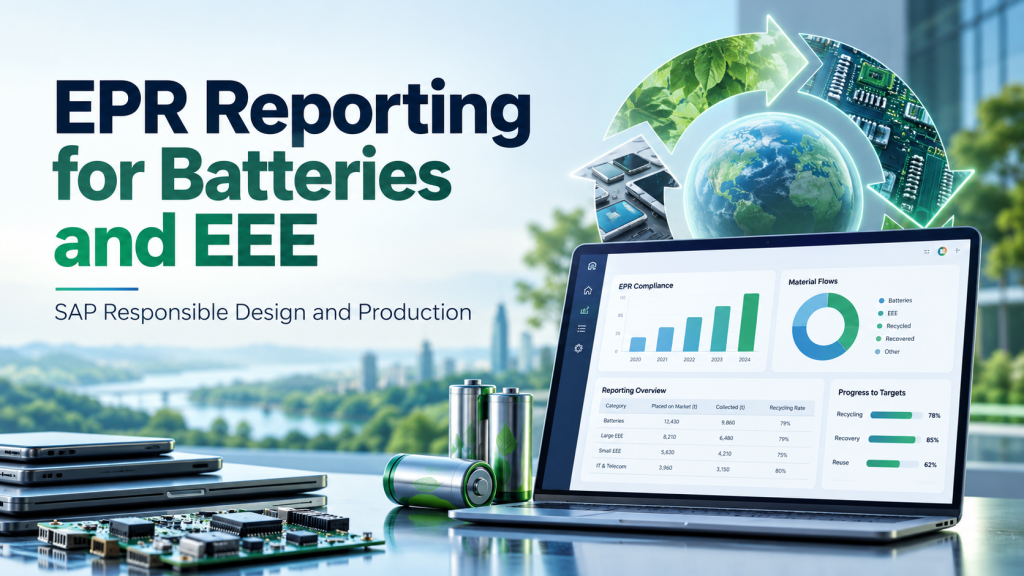

SAP has extended Responsible Design and Production (SAP RDP) with new capabilities for Extended Producer Responsibility (EPR) reporting for batteries and electrical and electronic equipment (EEE). In addition to packaging, further product categories can now be included in EPR reporting
EPR Reporting: More Than Just Packaging
In my previous blog post on the EU Packaging and Packaging Waste Regulation (PPWR), I discussed the requirements for packaging data, declarations of conformity, and technical documentation. However, Extended Producer Responsibility (EPR) goes beyond packaging. Electrical and electronic equipment, as well as batteries, are also subject to specific regulatory requirements.
Relevant European legislation includes:
- WEEE Directive 2012/19/EU: Regulates the management of waste electrical and electronic equipment and the associated producer responsibilities.
- EU Battery Regulation (EU) 2023/1542: Establishes requirements for batteries and waste batteries, including provisions on Extended Producer Responsibility.
This is precisely where the latest enhancement to SAP Responsible Design and Production comes into play.
SAP RDP now supports EPR reporting for batteries and electrical and electronic equipment (EEE), in addition to packaging.
Let’s take a closer look at the new capabilities.
1. New Data Capabilities and Apps for EEE and Batteries
SAP RDP now supports importing EEE and battery data. Two new applications are available for reviewing the imported or replicated data:
EEE Data
This application enables users to view and review the EEE data associated with their products.
Battery Data
This application enables users to view and review the battery elements associated with their products.
These applications provide dedicated functionality for reviewing product-related EEE and battery information within SAP RDP.
2. Enhanced Report Categories
Another important enhancement is the extension of report categories. The existing Report Categories application now supports the configuration of report categories for EEE and batteries. This functionality is available as part of the user-defined reporting capabilities in SAP RDP. As a result, EEE and battery data can now be incorporated into the configuration of EPR reports.
3. Rule-Based Calculations for EEE and Batteries
SAP has also extended the calculation capabilities of SAP RDP. Calculation rules for EEE and batteries can now be defined using the Rule Expression Language. Dedicated rule attributes and functions are available for these product categories. These extensions allow EEE and battery data to be considered in rule-based calculations.
4. EPR Fee Calculations Including Eco-Modulation
Another significant enhancement concerns EPR fee calculations.
SAP RDP now supports the calculation of EPR fees for EEE and batteries, including eco-modulation.
Eco-modulation refers to the differentiation of EPR fees based on defined criteria, which may include environmental characteristics of products. The applicable criteria depend on the relevant regulatory requirements and EPR schemes. With this enhancement, SAP RDP can also incorporate such fee calculations for EEE and batteries.
5. New Applications for Analyzing Calculated Report Data
In addition to the applications for reviewing product data, SAP has introduced two new applications for analyzing calculated report data:
EEE Report Data
Enables users to analyze calculated reporting data for electrical and electronic equipment.
Battery Report Data
Enables users to analyze calculated reporting data for batteries. These applications provide dedicated functionality for reviewing the results of EPR reporting calculations for both product categories. In addition to the applications for reviewing product data, SAP has introduced two new applications for analyzing calculated report data:
EEE Report Data
Enables users to analyze calculated reporting data for electrical and electronic equipment. These applications provide dedicated functionality for reviewing the results of EPR reporting calculations for both product categories.
Battery Report Data
Enables users to analyze calculated reporting data for batteries.
What Does This Enhancement Mean for SAP RDP Users?
The new functionality expands the scope of EPR reporting in SAP Responsible Design and Production. In addition to packaging data, SAP RDP now supports EEE and battery data.
The enhancement covers several steps in the reporting process:
- Importing EEE and battery data
- Viewing and reviewing imported product data
- Configuring the relevant report categories
- Defining rule-based calculations
- Calculating EPR fees, including eco-modulation
- Analyzing calculated report data
These capabilities provide additional EPR reporting functionality for organizations using SAP RDP.
Important: The features described above represent the documented scope of SAP RDP functionality. Whether and to what extent specific national reporting requirements can be fully addressed must be evaluated based on the applicable regulations and available system configuration.
Conclusion: SAP RDP Expands Its EPR Reporting Capabilities
By adding support for batteries and electrical and electronic equipment, SAP has expanded the capabilities of Responsible Design and Production beyond packaging-related EPR reporting.
The new EEE and battery data applications, additional report category configuration options, and enhanced calculation functionality provide the technical foundation for including these product categories in EPR reporting within SAP RDP.
Particularly relevant are the rule-based calculation of EPR fees, including eco-modulation, and the dedicated applications for analyzing calculated reporting data.
For organizations already using SAP RDP or evaluating its implementation, this enhancement expands the potential scope of the solution.
The specific application scenarios depend on the required product data, applicable reporting obligations, and system configuration.
#SAPRDP #SAPResponsibleDesignAndProduction #EPR #WEEE #BatteryRegulation #SAP #ProductCompliance #Sustainability #CircularEconomy #SAPConsulting
Ähnliche Artikel